Available for work
Verime Namibia
A Namibian identity and document platform on iOS and Android — store credentials securely, accept or decline share requests, complete business forms, and pick up applications exactly where you left off.
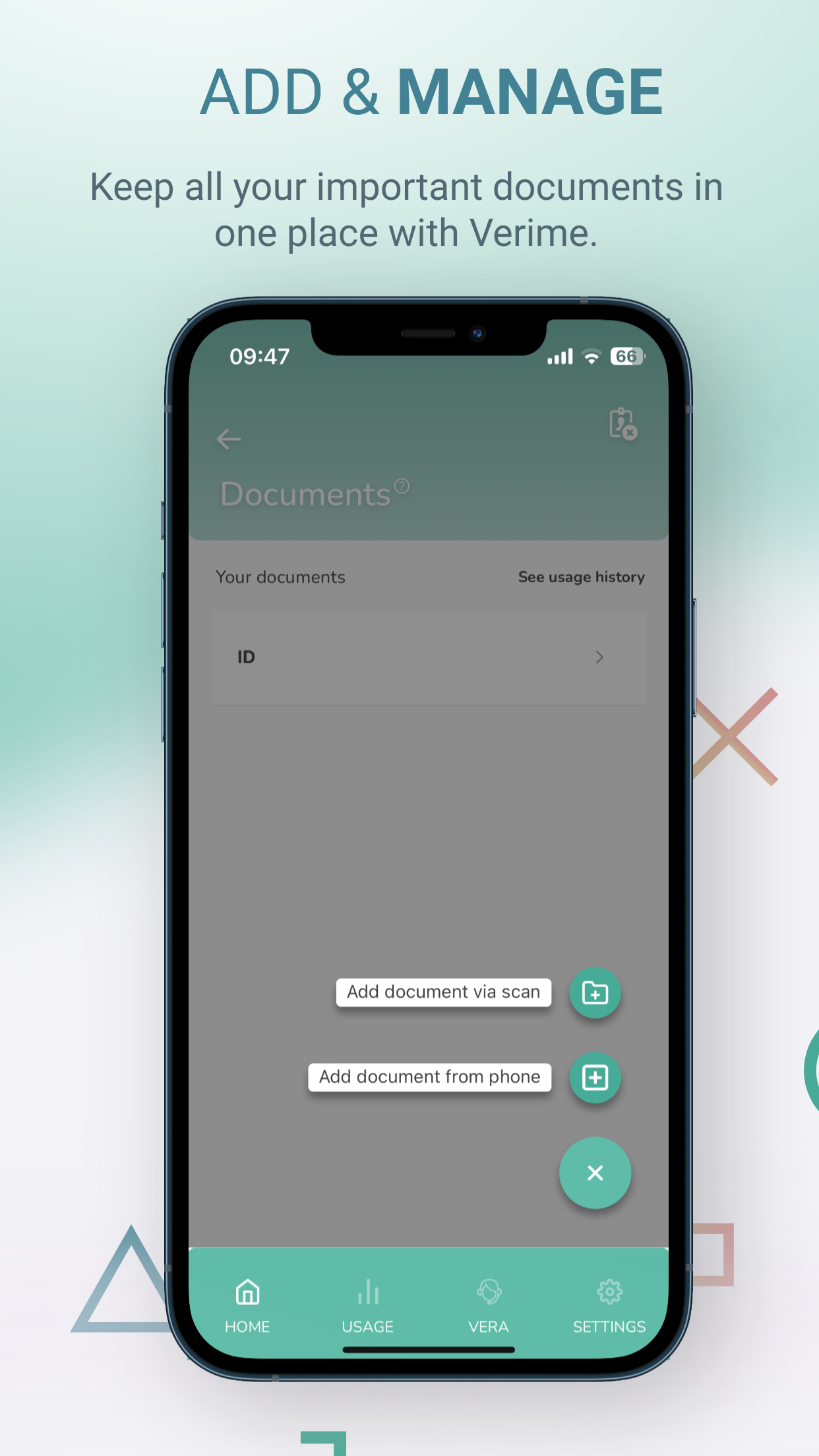
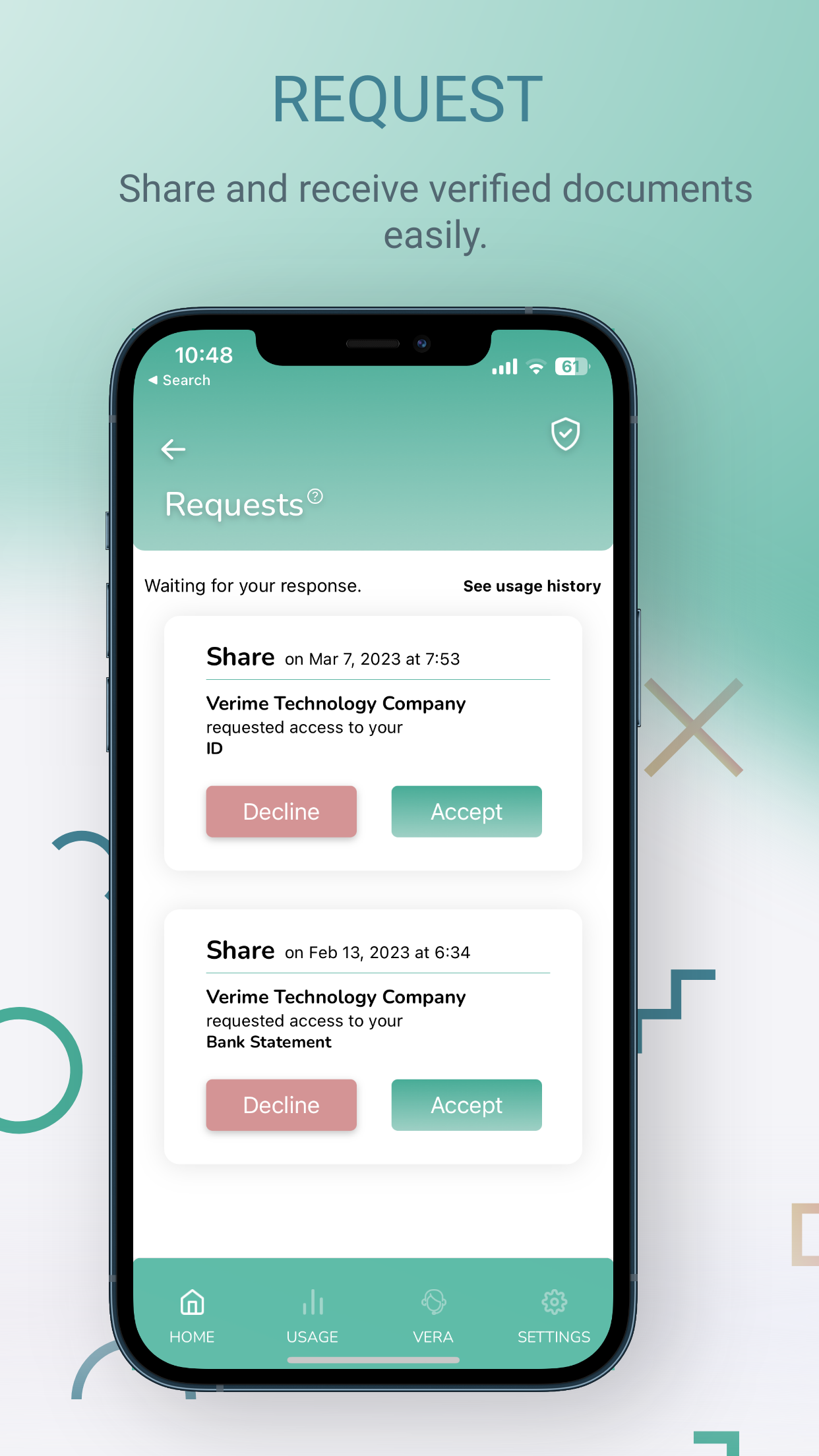
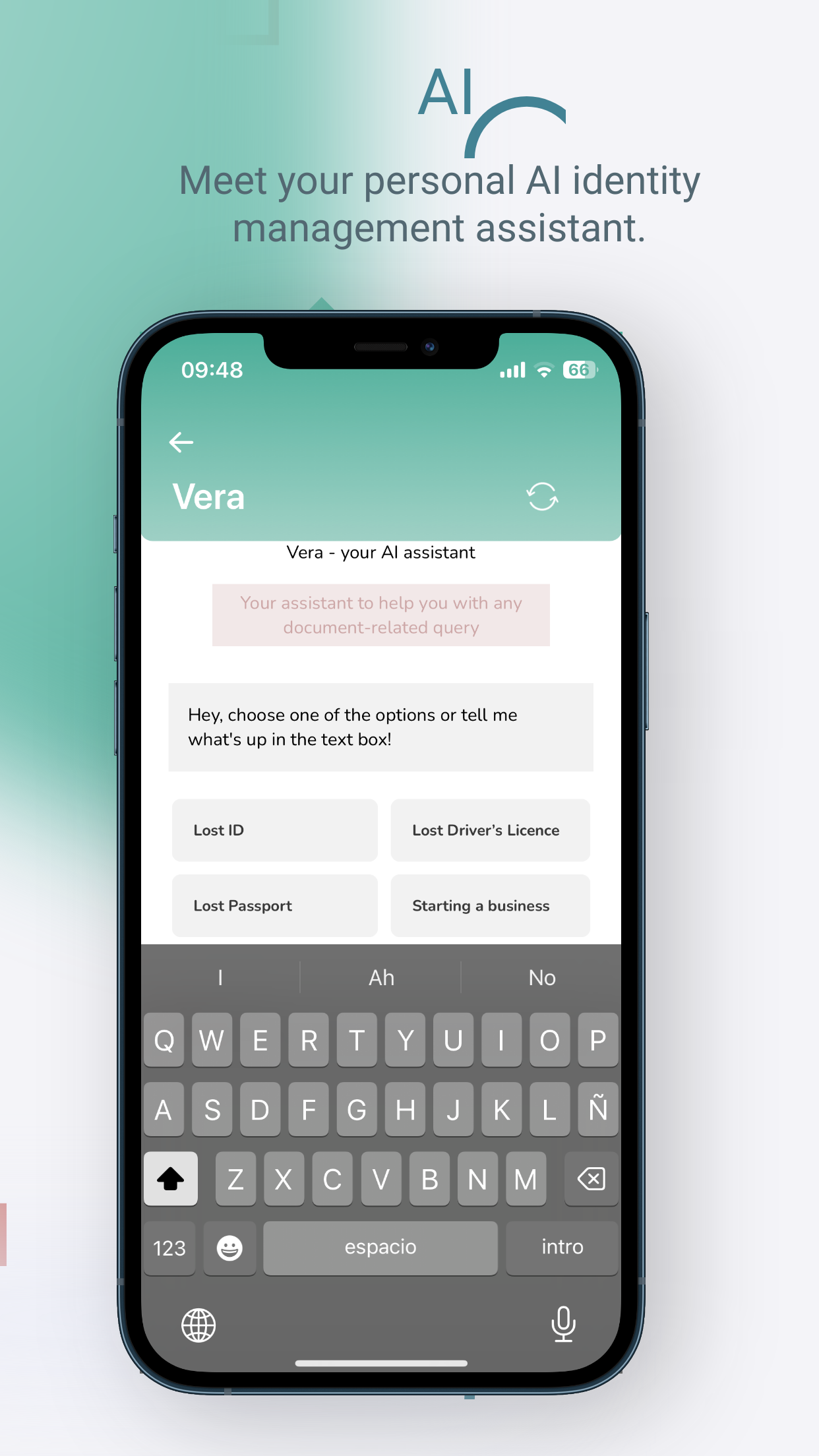
In Namibia, proving who you are and sharing the right documents still means paperwork, queues, and repeating the same details to every lender, employer, or service provider. Verime set out to replace that friction with a secure mobile wallet for identity information — one place to carry documents, respond to requests, and complete digital forms without starting over every time.
Ergo Analytics CC built Verime as a consumer-facing platform businesses could plug into: users scan or upload documents, review incoming share requests with explicit accept or decline controls, and fill structured forms issued by partner organizations — loans, support tickets, daily check-ins — from a single dashboard.
I worked across the stack — React Native apps for iOS and Android, the API behind document storage, share requests, and dynamic forms, and the release cycles that kept both stores current. That spanned the core document vault and consent flows through resumable applications, in-app PDF viewing, push notifications when an application is accepted or rejected, and the UX guardrails that stop someone from accidentally losing half-filled form data.
Goals & Success Criteria
“Done and good” meant four things: users can store and manage identity documents on their phone without treating the camera roll as a filing cabinet; every share of personal data requires an explicit accept or decline, not a silent default; multi-step business forms survive app restarts and accidental exits; and application status changes reach the user as a push notification instead of a follow-up phone call.
Approach & Key Decisions
Explicit consent on every share request. Incoming identity requests land on a dashboard with accept and decline actions — no automatic sharing because a link was opened. That matches how regulated identity products need to behave and gives users a clear audit trail of who received what.
Documents as a first-class vault, not attachments. IDs and credentials live in a dedicated documents section with scan and import paths, usage history, and quick retrieval — backed by API endpoints for upload, sync, and audit rather than local-only storage. The trade-off: more backend complexity, but a product that feels like a wallet rather than a web form in an app shell.
One API serving two mobile clients. iOS and Android share the same React Native codebase and hit the same REST API for documents, share requests, form schemas, and submission state — so a fix or new field type ships once on the server and reaches both stores. The trade-off: API versioning discipline as partner forms grew more complex over time.
Resumable applications over start-from-scratch. Long onboarding and loan forms persist progress server-side and locally so closing the app mid-flow does not wipe answers. Combined with exit confirmations before leaving an in-progress form, this directly addressed the highest-friction support issue: users losing work on slow connections or interrupted sessions.
In-app document viewing instead of handoff. Terms, PDFs, and external documents open in a built-in viewer rather than bouncing to Safari — keeping the user inside the flow they started and avoiding broken sessions on older devices. Release notes through v1.92 show this evolved through several iterations as document types grew.
Push for outcome, not noise. Notifications fire when application status moves to accepted or rejected — the moments that actually require action — rather than alerting on every backend state change.
Challenges
Form reliability on real devices was the recurring fight. Namibia’s mobile networks and mid-range phones punish heavy WebView forms and unvalidated exits. Date and time inputs, exit confirmations, and resume-state handling were added incrementally because each new partner form exposed an edge case — a field type the renderer did not support, or a user who backgrounded the app during upload.
The product also had to earn trust beyond the app store listing. Verime was selected in 2024 as one of the first participants in NAMFISA’s Regulatory Sandbox for non-bank financial innovation in Namibia — live testing under supervisory oversight. That raised the bar for consent UX, data handling transparency, and stability during pilot deployments with real financial workflows.
Results & Impact
Verime Namibia is live on the App Store and Google Play (v1.92, November 2024) for iOS and Android, with Apple Wallet support on iPhone and a productivity-focused identity workflow used by partner organizations on the platform. The apps ship document management, request consent, dynamic forms, resumable applications, in-app PDF viewing, and status notifications — backed by a shared API — and continued through NAMFISA sandbox selection as Ergo Analytics tested regulated fintech use cases in market.
What I’d Do Differently
I would standardize the form renderer contract earlier. Partner forms arrived with different field types over time; supporting date, time, and validation rules reactively meant repeated touch points to the same screens. A stricter schema upfront would have made each new organization onboarding cheaper.