Available for work
Based in NCR South, Philippines
Grands-Mères.net
Rebuilt a legendary French content brand — 1,600+ articles of home remedies and recipes — from an abandoned blank page into a fast static site that drives readers toward the founder’s book.
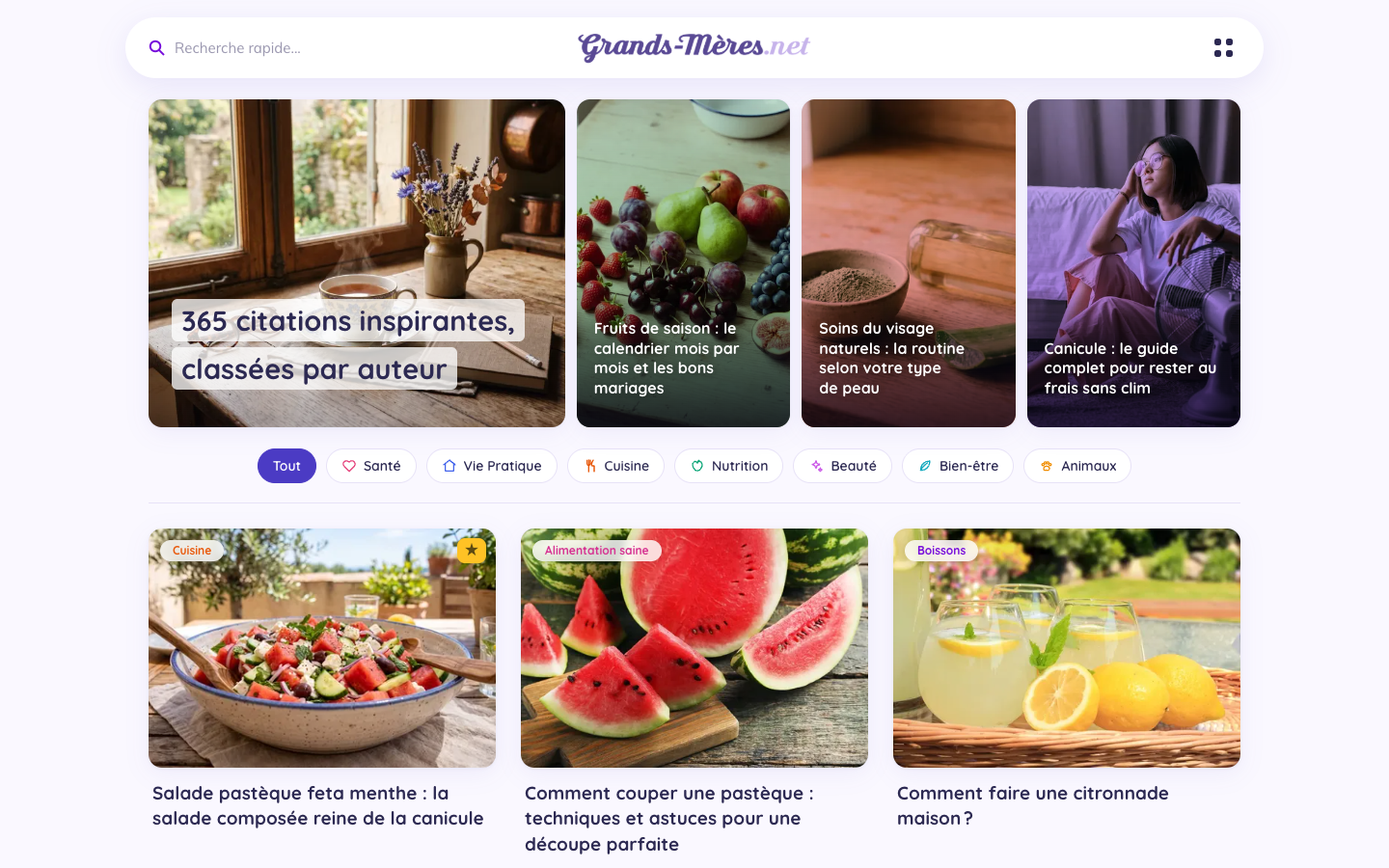
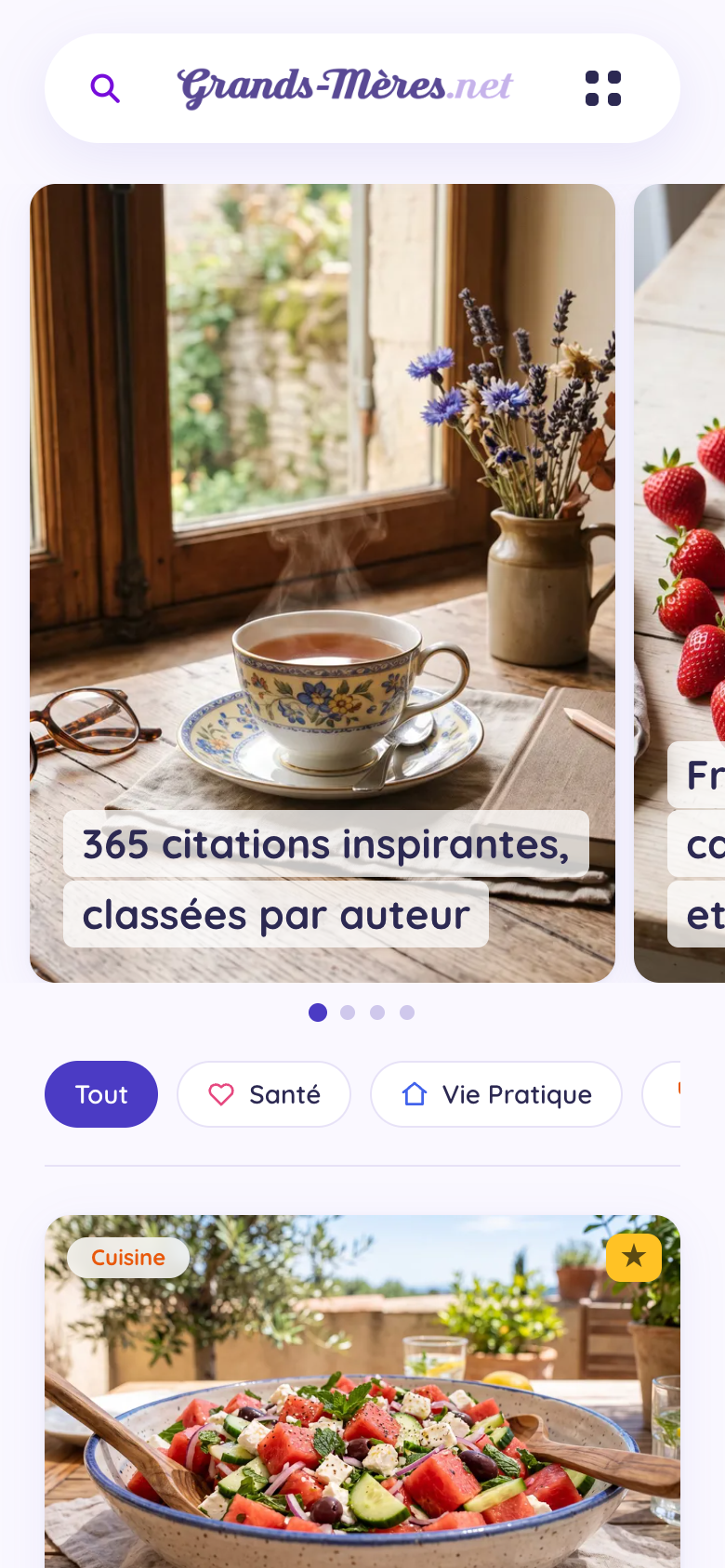
Grands-Mères.net is one of the best-known natural-remedies brands on the French web. Founded in 2011, it peaked at 2.8 million unique visitors a month, ranked 54th among all French general-public websites (OJD, 2015), and was twice voted Health “Site of the Year” — ahead of Doctissimo and the national health-insurance site.
Then it died. After a change of ownership, the site was left unmaintained and by late 2023 the domain served a blank page. More than a decade of remedies, recipes, and household tips — over 1,600 articles — was about to disappear.
In 2024 the original founders reacquired the brand through GIANTZ SAS. The mission: restore the entire archive, relaunch publishing, and turn the site back into what it always was commercially — the top of the funnel for the brand’s products, starting with the founder’s book, Ma Bible des remèdes naturels, sold on Amazon.
Goals & Success Criteria
Before writing code, “done and good” meant four things: restore all 1,600+ articles with their SEO-critical URLs intact; keep pages fast despite the display ads a content business depends on; give the book a persistent, non-intrusive conversion surface on the highest-traffic pages; and hand the editorial team a workflow where daily publishing needs no developer in the loop.
Approach & Key Decisions
Static generation over a CMS rebuild. The obvious path was rebuilding on WordPress — that’s where the archive came from. I chose a statically generated JAMstack build instead: the archive is largely read-only, and static output means near-instant pages, no plugin attack surface, and hosting costs close to zero for a site whose economics depend on ad margin. The trade-off I accepted: publishing goes through a build pipeline instead of a “Publish” button. For a daily cadence that is a fair trade; for a minute-by-minute newsroom it would not be.
Selling without a cart. The product sells on Amazon, so bolting on e-commerce would have added checkout friction and compliance burden for zero benefit. Instead I treated the book as the site’s primary conversion goal: a permanent placement on the homepage and contextual placements inside the health articles where reader intent is strongest — letting Amazon handle payment, delivery, and buyer trust. The trade-off: no first-party purchase data, only click-through tracking.
URL preservation as a feature. A decade of backlinks and residual rankings was the brand’s most valuable asset. I mapped the legacy taxonomy (Santé, Cuisine, Beauté, Vie Pratique…) onto the new content model and kept or 301-redirected every legacy URL — including the accented French slugs that break naive migration scripts.
Challenges
The hardest part was the archive itself: 1,600+ articles of decade-old HTML with inconsistent markup, dead embeds, and encoding artifacts around French diacritics. Bulk regex passes broke as many pages as they fixed, so I built a normalization pipeline that converted each article into clean structured content and flagged the ambiguous ones for editorial review, rather than silently guessing.
The second fight was layout stability. Ad-supported pages love to jump around as slots load. Reserving explicit space for every ad unit and lazy-loading below-the-fold media kept cumulative layout shift under control without sacrificing ad revenue.
Results & Impact
The full archive is restored, verified, and live, and the team publishes daily without developer involvement. The book funnel runs on the homepage and across the highest-intent article categories. The brand is transparent that rebuilding its former multi-million audience is an ongoing project — but the platform that made that audience possible exists again, faster than it ever was.
What I’d Do Differently
I would build the content-normalization pipeline first, before touching the frontend. I underestimated how much of the project the archive cleanup would be, and the early frontend work had to be revisited once the real shape of the legacy content emerged.